
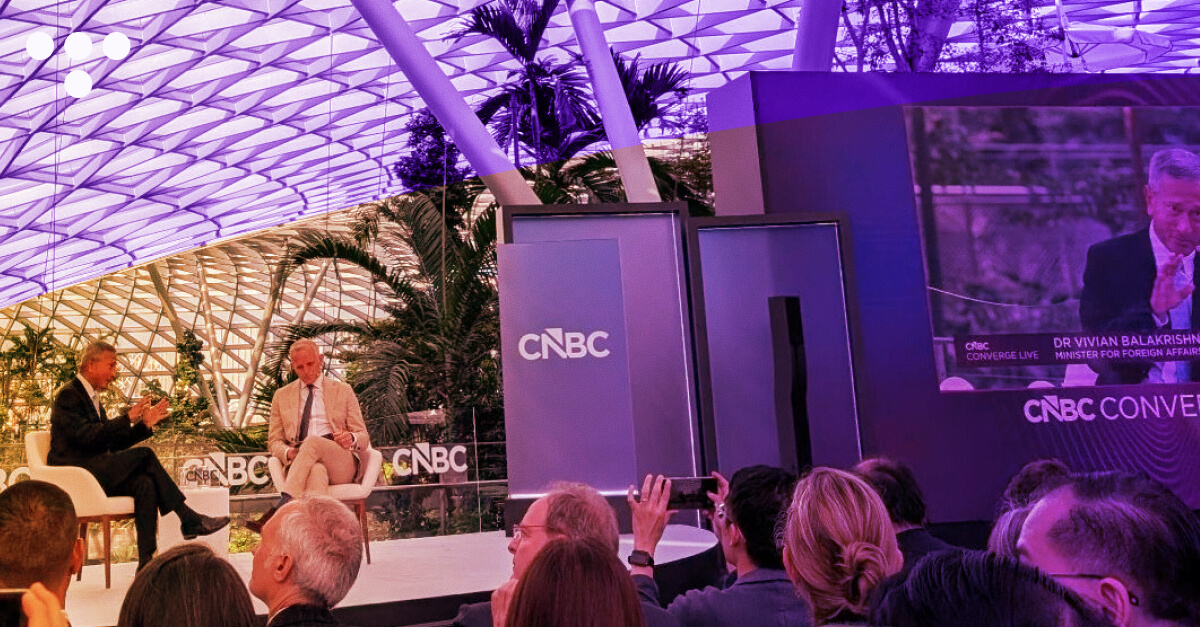

Read the news lately? If so, you know the business and policy-making world is currently obsessed with two things: the global oil conflict in Iran and AI taking over the world. While it's easy to just skim the headlines, watch some clips on your news feed, and call it a day, I had the opportunity of spending two days exploring the intersection of these topics at CNBC's Converge Live at the jaw-dropping Jewel in Singapore’s Changi Airport. The event drew together fellow enthusiasts in business, policy, and economics; along with, of course, many CNBC news junkies like myself.
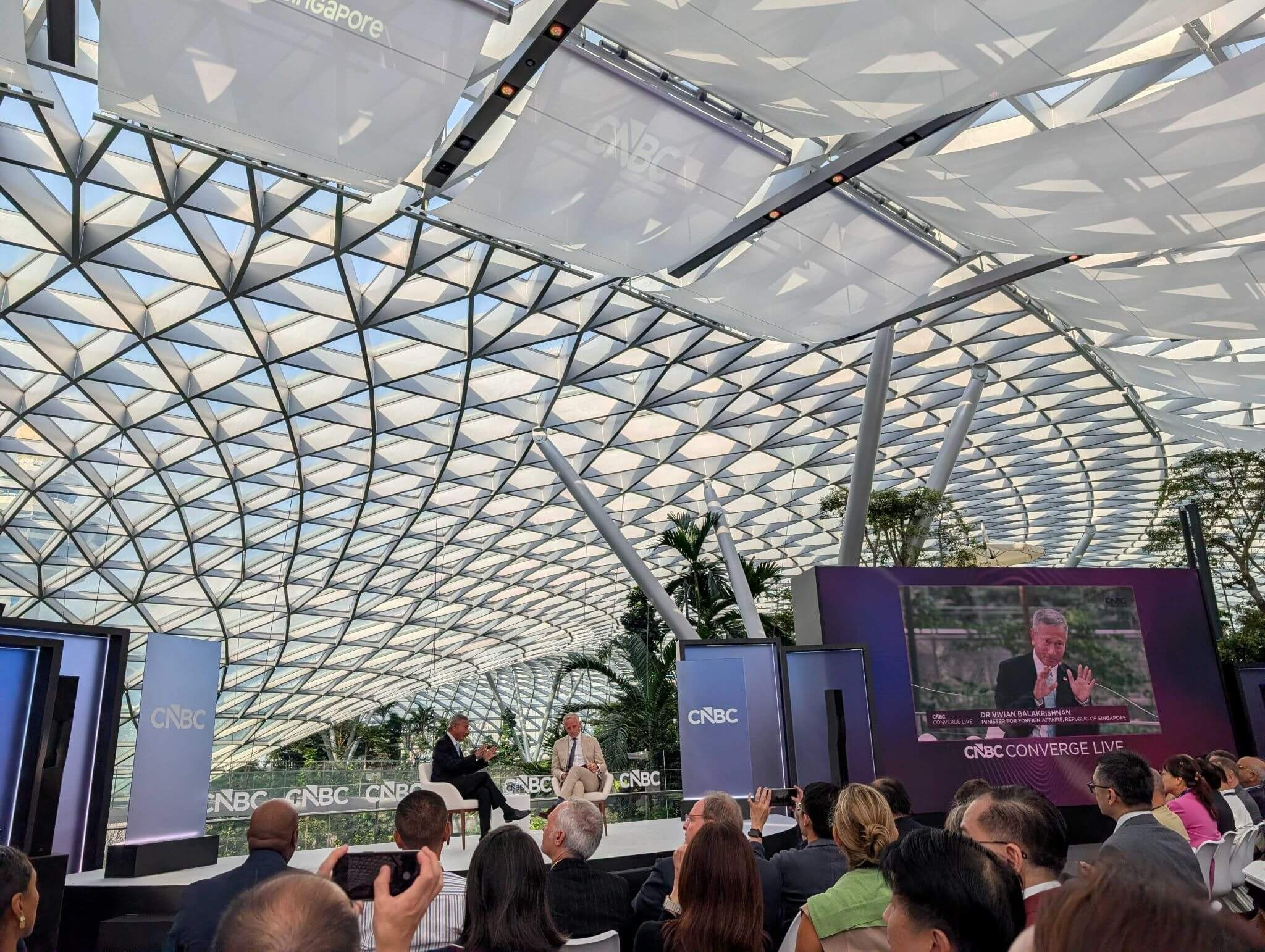
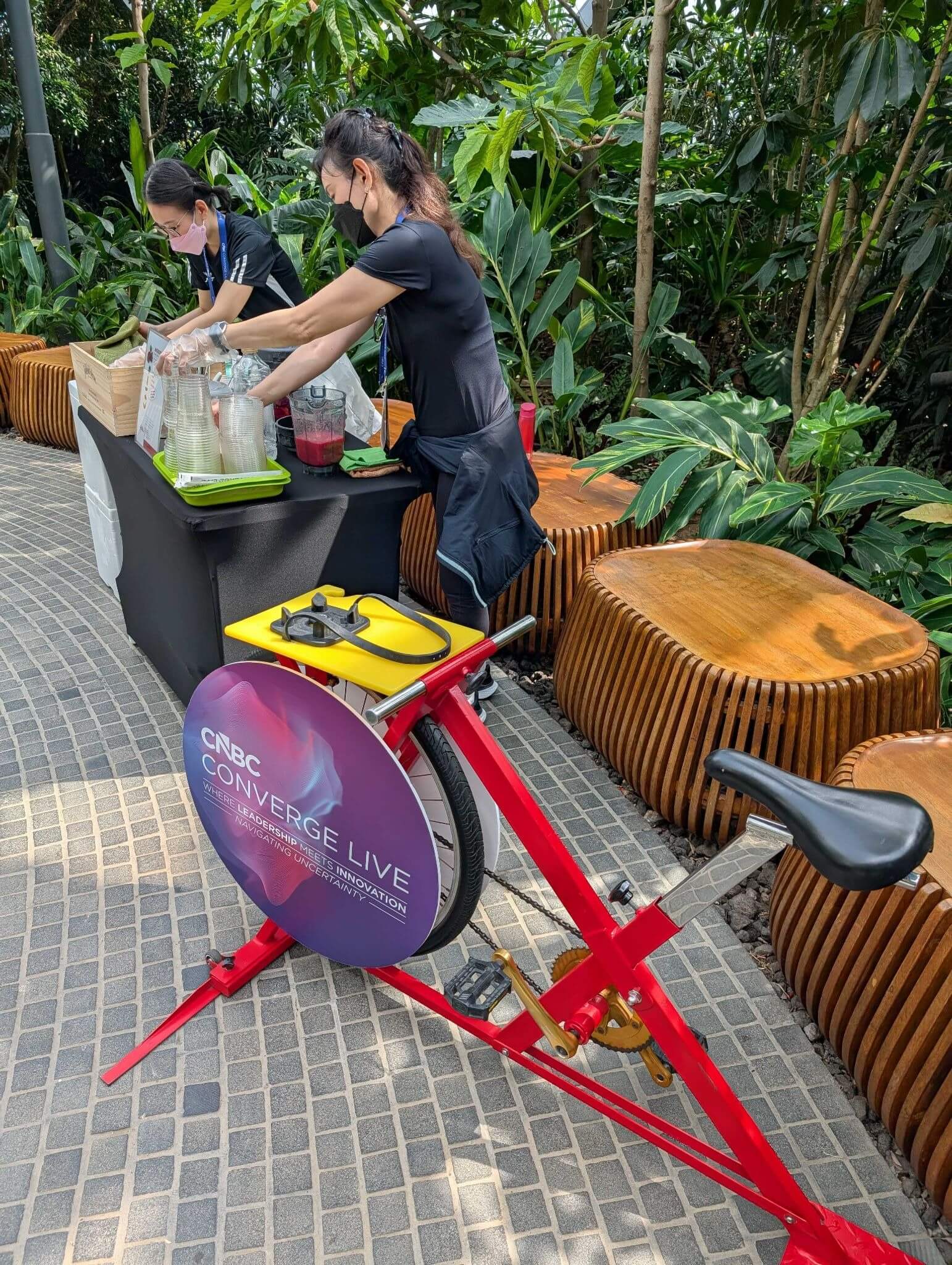
From deep dives into the "SaaSpocalypse" (maybe not as dramatic as it sounds) to high-stakes discussions on global energy security and the shifting geopolitical trade landscape, the sessions provided nuggets of where the world is headed among all this uncertainty. Between the panels, there was even time to hop on a smoothie pedal bike, to get some extra sweat in the Singapore heat.
The discussions were compelling, ranging from Capital Group CEO Mike Gitlin’s insights on Gen Z’s hobbyist investing to Dr. Tan See Leng’s 50-year energy strategy for Singapore. Against the backdrop of all the news recently, these talks carried a certain weight that was palpable. Having such high-caliber speakers addressing rapid global shifts provided essential grounding and offered clarity on current world uncertainty.
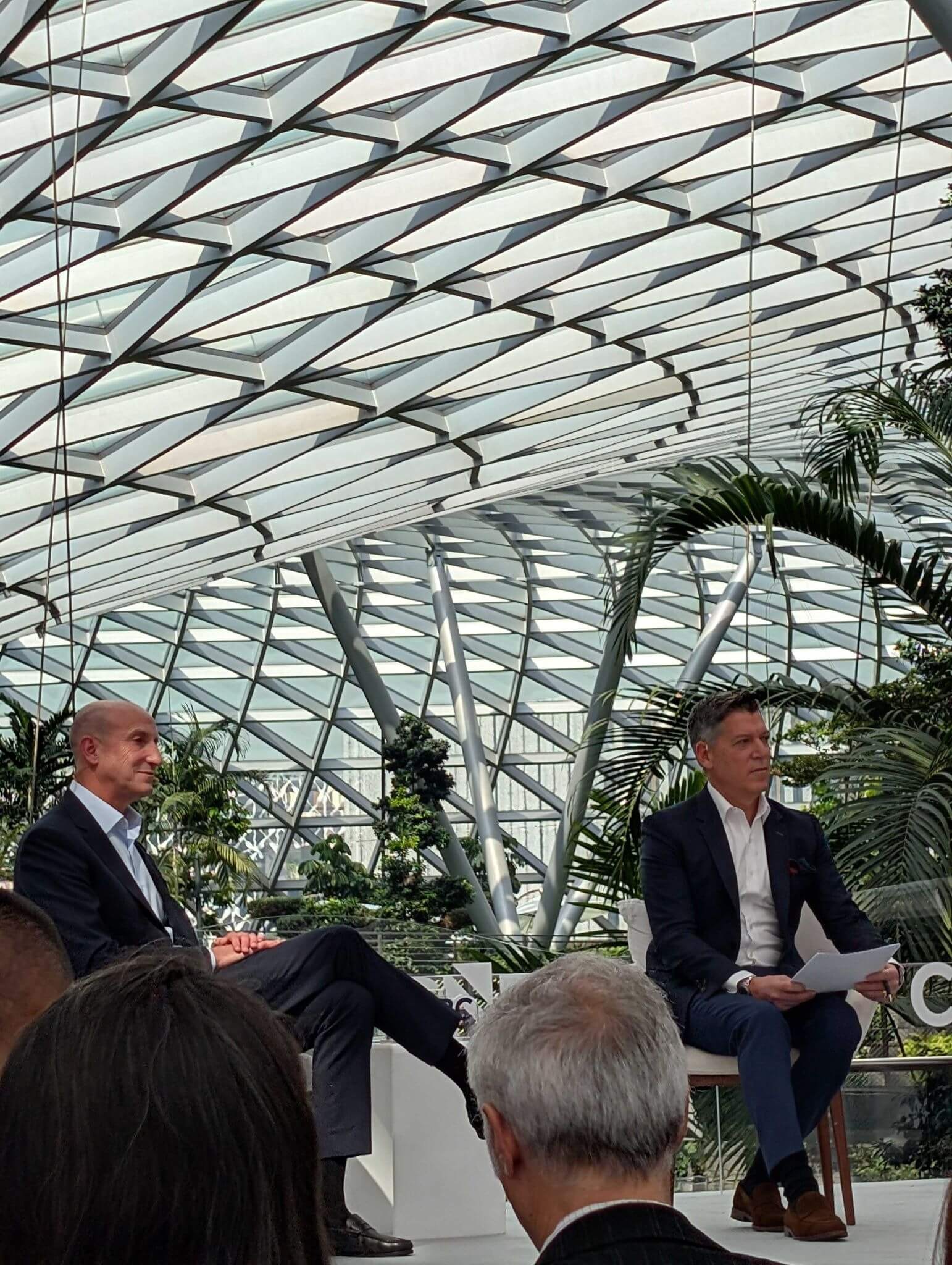
There were so many eye-catching sessions at Converge Live 2026, from space exploration and possible colonies on the moon by 2032, to AI and music. I wasn’t able to include them all, but I wanted to comment on the top themes from the show that spoke to me the most.
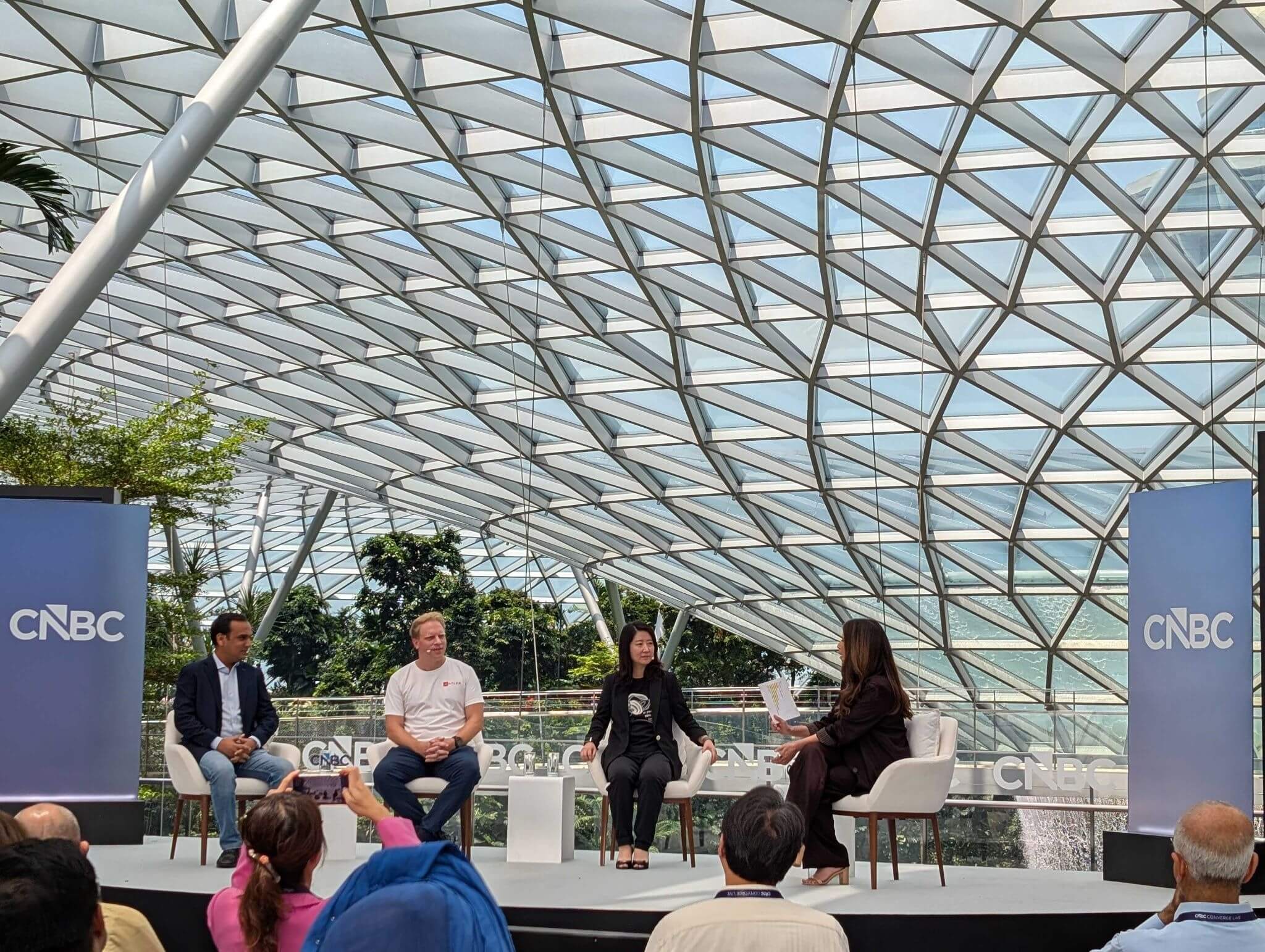
Venture Capital Shifts Focus as "SaaSpocalypse" Reprices Trillions
Working in SaaS, this session got my attention more than all the others, so of course I’m going to put it first. Anyone working in the software industry is well aware of the doom and gloom going around. This session focused exactly on that and the fundamental crisis of faith in the traditional SaaS business model due to the rapid rise of Agentic AI.
The panel explored the so-called "SaaSpocalypse," noting how it has forced a massive recalibration of valuations and strategies across the venture capital landscape. Yet, even as late-stage funding tightens, the panel highlighted how AI is fueling a fresh wave of competition and conviction, specifically within vertical AI, infrastructure, and foundation models.
Led by Daisy Cai (B Capital), Magnus Grimeland (Antler), and Rohit Agarwal (Peak XV), the group dived into the following topics:
- Pricing Model Overhauls: The traditional seat-based business model is being challenged as inefficient, with a strong push toward outcome-based and utility-based pricing. Magnus compared AI to electricity; it is a resource that will be paid for based on usage or outcomes rather than just as a static software asset. AI is also fundamentally altering traditional software margins. Because compute costs, or the "brainpower" consumed through GPU infrastructure, API fees, and inference costs, scale linearly with usage, traditional high-margin (80-90%) software models may see margins drop to (50%-60%).
- System of Records vs. System of Intelligence: The experts analyze the risk to companies that rely on "systems of record" (databases where data is simply stored). They suggest that companies acting merely as layers of data collection are more susceptible to disruption, whereas those that can effectively provide actionable intelligence or automation will win out.
Don’t worry it’s not all doom-and-gloom for traditional tech, check out this CNBC video featuring Daisy Cai, speaking about the tech restack and future of SaaS and how business will need to adapt.
Geopolitics and Global Capital Flow: Navigating an Unsettled World
During the opening keynote, Deputy Prime Minister of Singapore, Gan Kim Yong, highlighted that the global landscape is becoming more contested and fragmented, driven by forces such as the disruption of critical trade routes and the need for energy security.
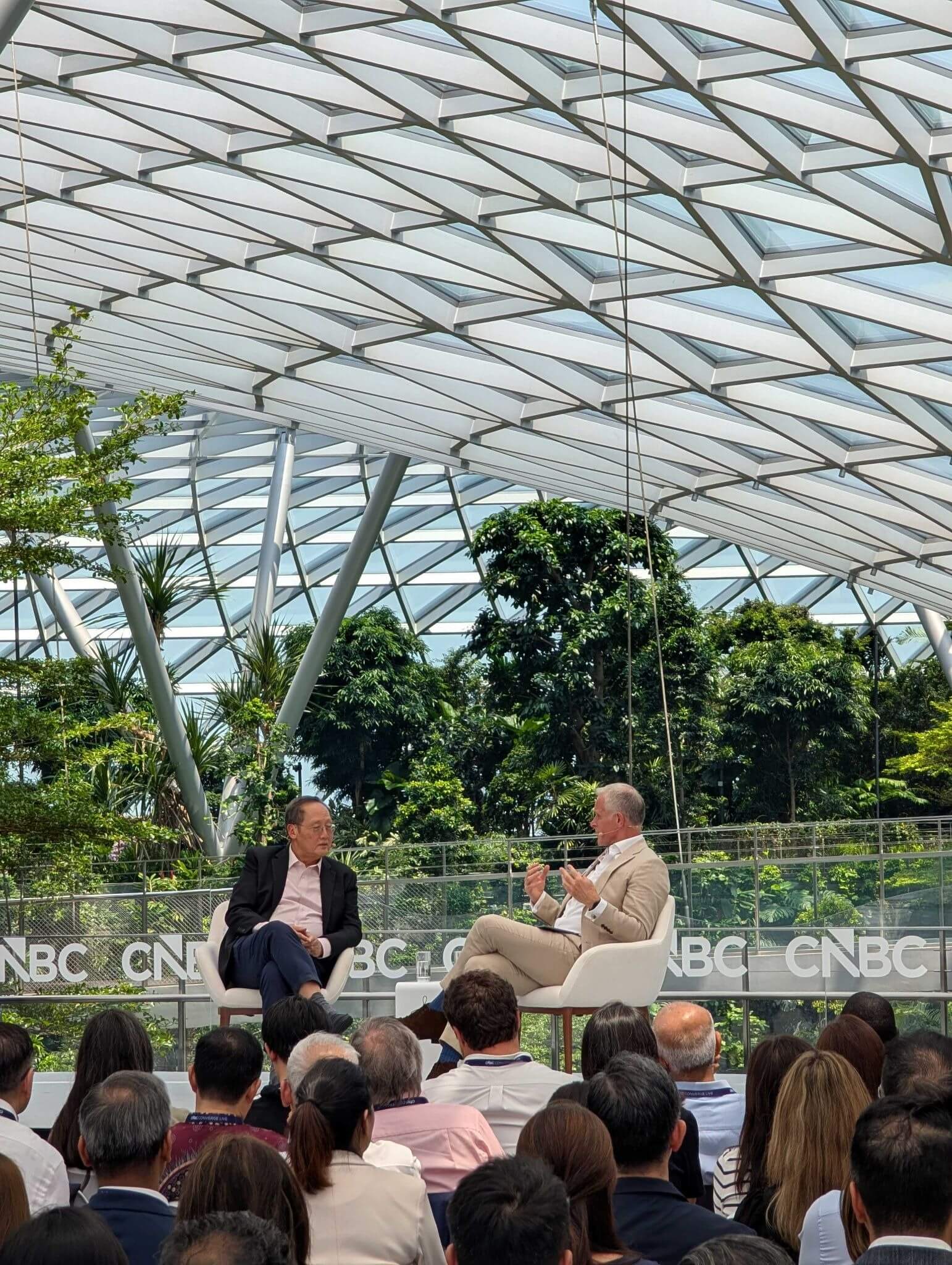
Geopolitical change around trade and ongoing tensions are clearly testing the core assumptions that supported a generally free global trade viewpoint. Countries and companies are adjusting to this changing landscape and major talking points that stood out were:
- Weaponization of Interdependence: During a fireside chat, Singapore Minister for Foreign Affairs, Dr. Vivian Balakrishnan, discussed a significant shift: the framework of globalization and economic integration, initially created to promote efficiency, peace, and prosperity through connectivity and interdependence, is now being weaponized. He described this as a move away from the traditional advantages of global markets toward utilizing those connections as a form of strategic leverage.
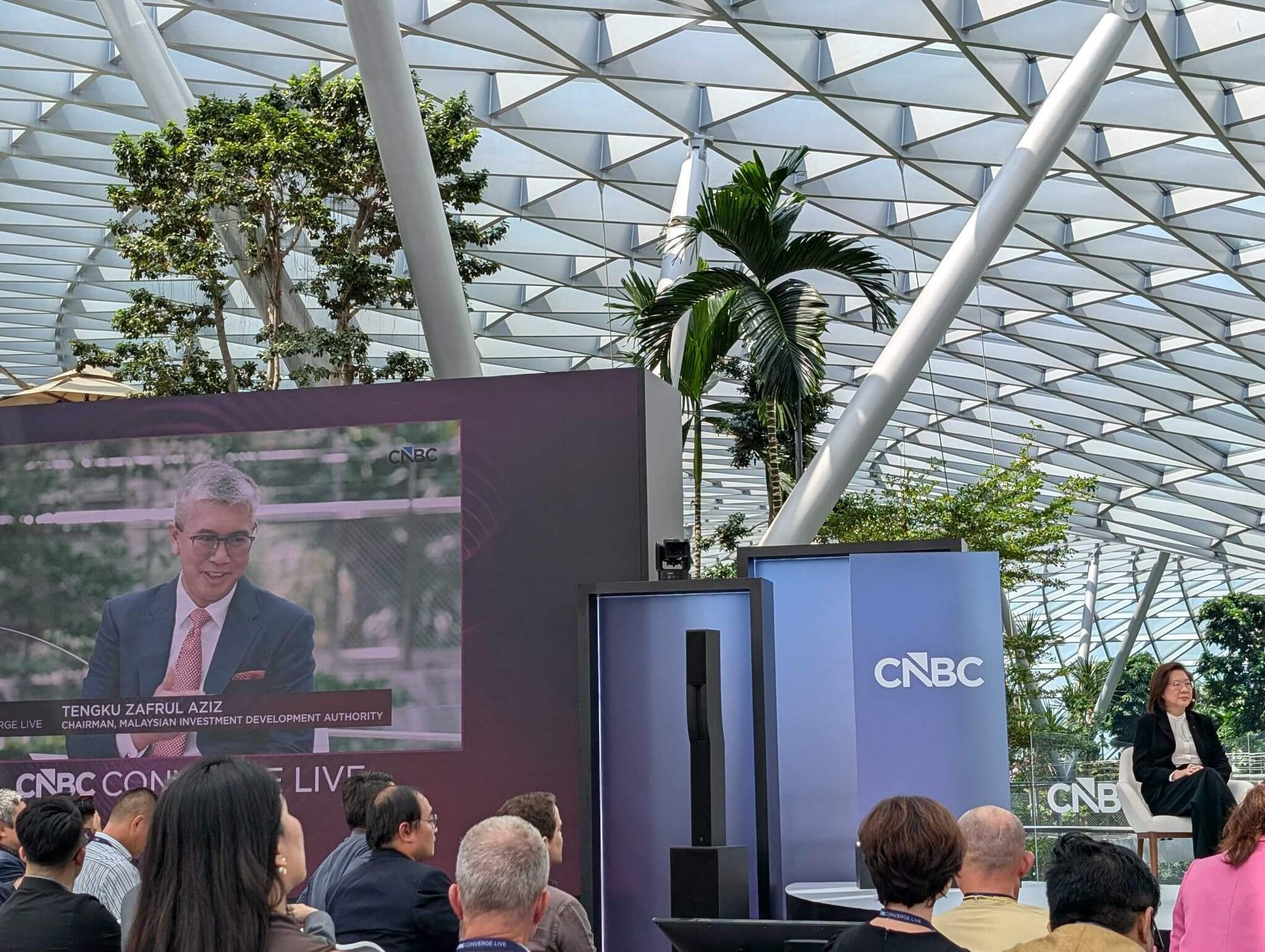
Examples of this over the years include Russia using Europe’s dependence on natural gas as leverage during the Ukraine conflict, China leveraging its dominance in rare earths against Japan in 2010 by cutting off supply during trade negotiations, or the EU’s digital sovereignty push against reliance on US cloud providers. What these cases share is the same underlying logic Dr. Balakrishnan described: the deeper the integration, the sharper the weapon it can become. - Redrawing of the Global Trade Map: In the "Redrawing the Global Trade Map" discussion, MIDA Chairman Tengku Zafrul Aziz and CGS International CEO Carol Fong shared how middle powers are navigating the current global turbulence. They pointed out that even though we're seeing instability from things like tariffs and resource disputes, Southeast Asia is actually coming out ahead.
It's seen as a reliable, neutral hub, a vital bridge for companies looking to spread out their supply chains. Their key takeaway? To stay central to the global supply chain, we need to really focus on trade within ASEAN and make sure we keep our neutral stance.
- Economic Coercion with Bombardier: On Day Two, former Prime Minister of Canada, Justin Trudeau, highlighted a specific story of how Boeing and Airbus nearly drove Bombardier (a Canadian aerospace company) into Chinese hands by aggressively sabotaging the market entry of the fuel-efficient C Series aircraft.
"Airbus and Boeing did everything they could do to prevent Bombardier from being able to sell those aircraft. They were talking to all their customers, 'Don't you dare put in an order for the C-Series! Don't you dare, don't you dare!' And finally, Bombardier started really struggling," he said.
According to the former Canadian PM, this trade disruption created a financial vacuum that China attempted to exploit to secure Canadian technology and jobs, a risk Trudeau notably flagged to world leaders at the 2017 G7 summit.
"So what happens? China comes knocking on Bombardier's door and pulls up a dump truck full of money." he said. "So Boeing and Airbus, that were busy trying to put out Bombardier out of business ... almost drove us into China's arms."
The crisis was ultimately averted when Airbus acquired the program and rebranded it as the A220, transforming a competitive threat into a strategic partnership that integrated Canada deeply into the global Airbus supply chain.
Global Energy in Crisis
When the head of the International Energy Association, Faith Virol, joins the stage via video conference and states that Europe has six weeks of jet fuel remaining. Your eyebrows raise and you question if you heard that correctly. That moment underscored the fragility of the current global energy market.
In the US and North America, gas prices are up about $1 YoY at $4.09/gallon as of late April. While this puts a strain on consumers, the U.S. has largely shielded itself from the worst of the Middle East supply shocks by leaning on its status as a top global producer. However, Birol was clear: no country, including the United States, is truly immune to this level of international volatility.
The situation across the ASEAN region is far more dire, characterized by station closures and strict rationing. Nations like Vietnam, Indonesia, Malaysia, and many others have recommended some form of work-from-home (WFH) policies for government and private sector employees to curb consumption. Malaysia has even apparently saved some 334,000 litres of fuel through work-from-home policies according to a government spokesperson, although the long-term sustainability of such measures remains a point of debate.
Not only is WFH on the table to curb rising energy costs, indoor office AC temps are also going up. With Singapore telling government employees to raise indoor office temps to at least 25C (77F). Beyond that, eateries in India are scrambling for fuel, with costs of liquid petroleum gas (LPG) rising rapidly. With nearly 90% of India’s LPG imported through the Strait of Hormuz, businesses are being forced to trim menus and find alternative cooking methods just to stay afloat.
Key Takeaways: Resilience, Neutrality, and the Long View
The panel discussions yielded three critical insights into how middle powers are navigating this energy minefield:
- Strategic Neutrality with China and the US: Amidst the US-China rift, the consensus among middle powers is a firm refusal to be forced into a binary choice. Dr. Vivian Balakrishnan emphasized that Singapore operates solely on its own long-term national interest, stating, "We will refuse to choose" between Washington and Beijing. By increasing intra-ASEAN trade, these nations are building a regional buffer against the trade disputes of superpowers.
Although, one day after the conference, Indonesia had to walk back talks of exploring tolls at the Strait of Malacca, which handles upwards of 40% of global trade and 35% of seaborne oil. - The Power of Trust: Reflecting on the 1973 oil embargo, Dr. Balakrishnan highlighted the value of historical reliability. By refusing to panic during past crises, Singapore established a reputation for stability that helped build its massive refining capacity, a legacy that serves as a blueprint for surviving today’s volatility.
- A Post-Oil Outlook: While short-term supply remains a challenge, the long-term outlook is surprisingly optimistic. Speakers pointed to initiatives like Saudi Arabia’s Vision 2030 as proof that even the world’s biggest oil powers are aggressively diversifying toward a post-hydrocarbon future.
Compared to the software and HR focused events I usually attend, it was extremely refreshing to attend something with a broader, innovation and leadership focus. Overall, it was a tremendous two day event, and I’m really glad CNBC allowed me to attend.
For a complete record of the event's proceedings and additional details, head over to CNBC Converge’s homepage to find more information or visit the YouTube upload for Converge Live Day 1 and Day 2.