
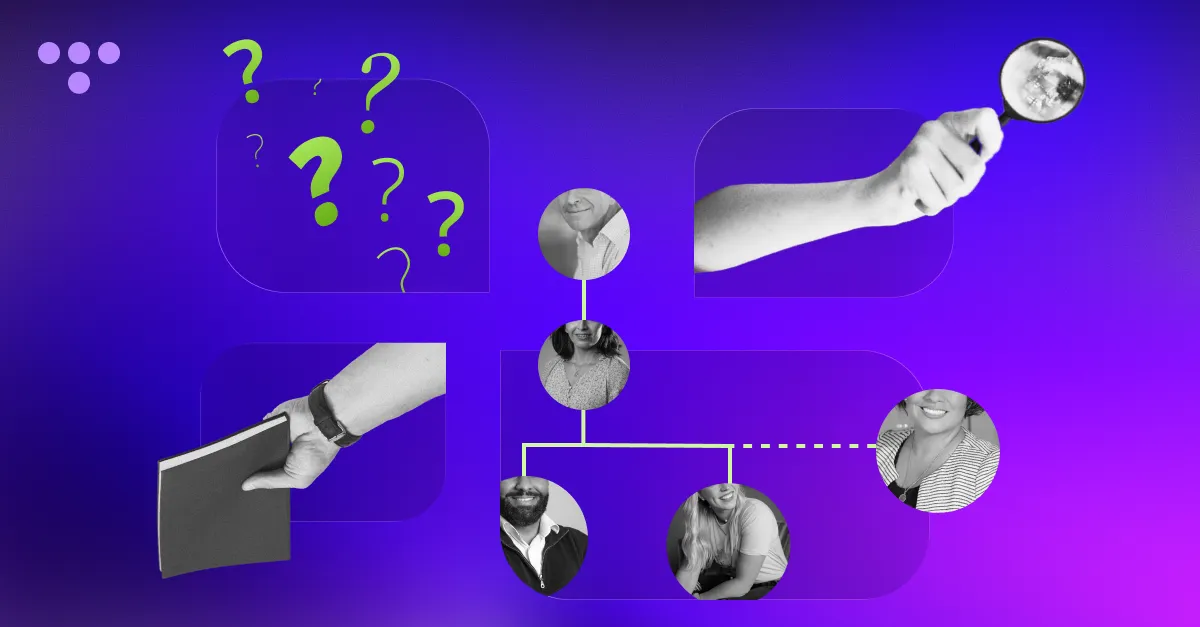

Somewhere in your company right now, someone is typing "does anyone know who handles vendor contracts?" into Slack.
Not because they are lazy. Not because the answer doesn’t exist. Because the employee directory gave them a name that left the company in February, the org chart was last updated during a different presidential administration, and the intranet search returned seventeen documents about vendor contracts and zero humans who manage them.
This is not a you problem. This is an intranet problem. And almost every company on the planet has it.
The Intranet Was Built to Store Things. Not to Know People.
Let us be fair: intranets are genuinely good at what they were designed to do. SharePoint, Confluence, Igloo and their many cousins are excellent at storing documents, publishing announcements, and housing the kind of content that accumulates inside every company. They are basically very organized corporate attics, and I mean that with love.
The problem is that at some point, someone said "we should also put the employee directory in here" and because intranets can technically hold a list of names and titles, nobody pushed back. The directory went in. The org chart went in. And then, slowly, like a houseplant that nobody remembers to water, it stopped reflecting reality.
Here is what usually happens next:
Someone changes teams. IT has to be notified. IT creates a ticket. The ticket gets resolved in two weeks. The directory updates. Three weeks later, that person moves teams again. Wash. Rinse. Repeat…Forever. The org chart, meanwhile, is a static image someone exported from PowerPoint in 2023 and uploaded once. The result is a directory nobody trusts, an org chart that is more like an ancient artifact, and a company full of people who have developed a workaround: they just ask someone who might know someone who might know.
According to Gartner, nearly half of all employees cannot find what they need to do their jobs. Think about that for a second. Half your company is wandering. And the cruel irony is that most of the time, the answer is not buried in a document. It is sitting in the brain of a person three teams over whose name nobody knows because the org chart has not been updated since the last reorg. That is not a search problem. That is a people problem.
The org chart deserves its own paragraph because it has developed a reputation for being the political artifact of the corporate world. Everyone knows it is wrong. Nobody wants to be the one to fix it because it's tedious, time consuming, and very manual. And yet it keeps showing up in all-hands presentations with a small disclaimer that says "as of Q3" on a slide but it’s currently Q2…of the following year.
An org chart isn't just a diagram; it's a living map of how your company actually works. Beyond reporting lines, it shows dotted-line leads, and how power and decisions really flow day to day.
Most intranet org charts show none of that. They show a tree. A very confident, very outdated tree.
A purpose built org chart and employee directory isn't just an intranet with better people features…
The architecture and the outcome are genuinely different. It syncs from your HR system, not your IT system. Your HRIS (Workday, Paycom, ADP, UKG) is the authoritative record of who works at your company. A dedicated people platform pulls directly from it on an automatic schedule. Someone joins and *poof* they appear, someone moves teams *poof* the org chart updates, someone leaves *poof* they're gone. No tickets, no lag, no phantom employees.
It searches for people, not content about people
Type "French speaking, project manager experience in Chicago" into most intranet search bars and brace yourself…for the lack of response. A dedicated people search returns a person instantly by skill, language, experience, role, or any attribute that matters. Sift customers save an average of 38 minutes per employee per week just by eliminating the Slack messages it used to take to find the right person.
It shows the org chart as it actually exists…
Dotted-line relationships, open roles, employee count, salary information; the living structure of how work gets done, not how it looked the last time someone opened a PowerPoint. Sift's 500,000+ users aren't looking at a diagram someone uploaded once. They're looking at a real time map that was updated overnight.
Profiles people actually fill out
Because the platform's whole job is making people findable, employees have a reason to keep their profiles current; skills, languages, experience, working hours, all of it. The more people use it, the better it gets. The opposite of an intranet directory, which starts to die out the moment it goes live.
You don't have to choose one or the other
The answer isn't intranet OR people platform…it's both. Sift runs alongside your intranet as a dedicated people layer, doing the one job your intranet was never built to do. It lives in Microsoft Teams, embeds in SharePoint, and doesn't ask you to rip anything out.
Your intranet answers "where is the document?” Sift answers "who do I need right now?" Those are different questions. They deserve different tools.
One of them is currently being answered in a Slack channel that starts with "does anyone know who handles…"
It doesn't have to be.