

In the early days of a startup, knowing "who’s who" is easy. You’re all in one group thread, you know who sits at the corner desk, and you probably know everyone’s favorite coffee order. When you reach that stage, a tool like Workleap Pingboard feels like a perfect fit. It’s colorful, it has a fun "Who’s Who" flashcard game, and it puts a face to a name. But then, the "Growth Wall" hits.
As your organization scales past 250, 500, or 1,000 employees, the needs of your team shift. Suddenly, it’s not just about seeing a photo; it’s about finding expertise. You don't just need to know who the Marketing Manager is, you need to find the Marketing Manager in the EMEA region who has experience with SQL and speaks German. You need to move projects forward and get work done.
In this post, we’re breaking down six reasons people are considering moving off Pingboard, with a deep dive into why Sift is becoming the go-to choice for organizations that need a faster and easily searchable way to connect their people.
Top Reasons People Are Considering Switching
1. The "Scale Lag" and Navigation Hurdles
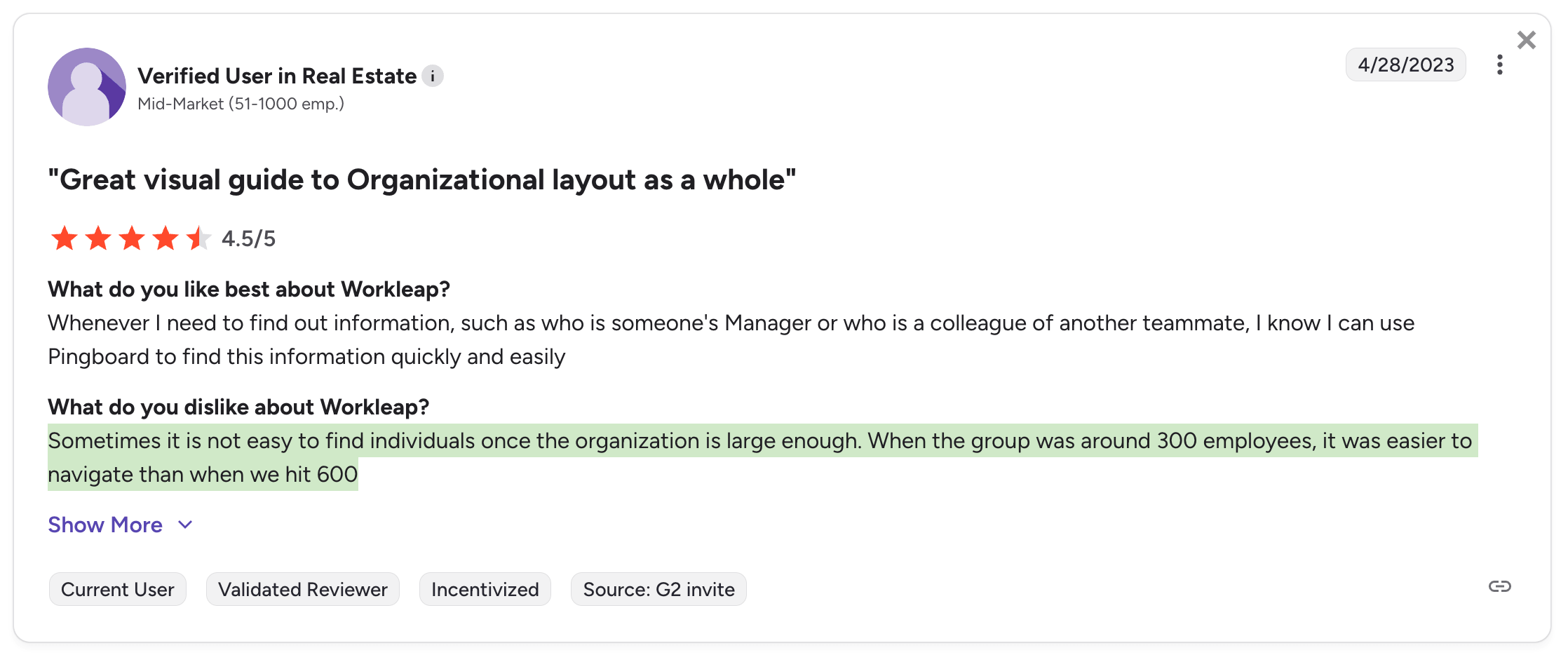
From several reviews users note that scaling and nav issues can occur. One user mentions on G2, “Sometimes it is not easy to find individuals once the organization is large enough. When the group was around 300 employees, it was easier to navigate than when we hit 600.”
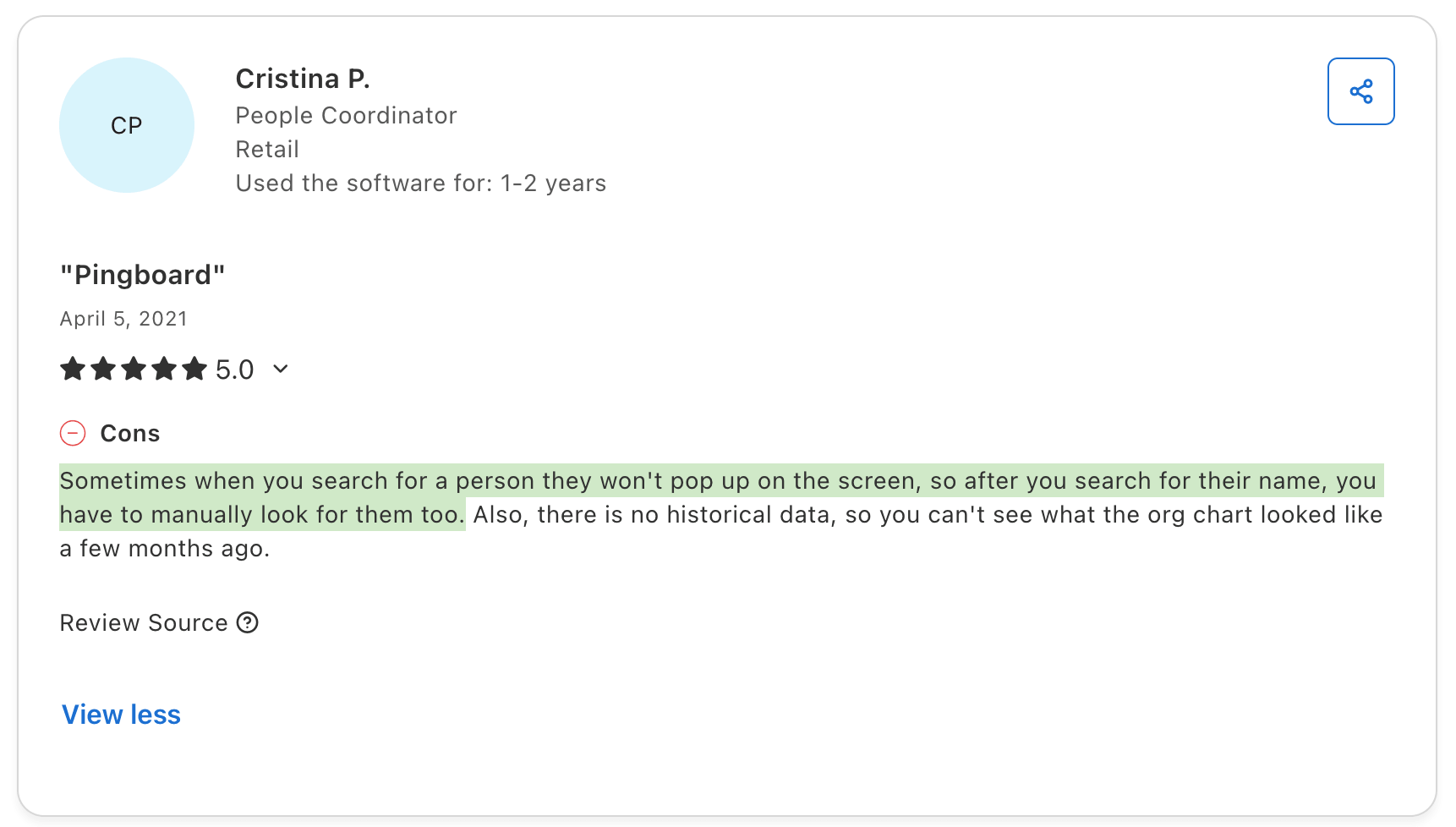
The primary objective of most employee directory tools is to enable quick people-finding, whether by name, skill, or other criteria. However, one user reported that a simple name search forced them into a manual lookup process, which completely undermined the directory's search function.
Sift’s Approach: Sift was built with the enterprise in mind. Our architecture is designed for speed, allowing you to fly through an organization of 1,000+ people with the same "zero-lag" experience as a small team. Large orgs like Rocket Mortgage, Sumitomo, Rehmann, Ping Identity and Esler are just a few examples of large organizations that enjoy Sift.
Sift has also been an Enterprise Leader in the G2 Org Chart Software and Employee Engagement category for 14 out of the past 15 quarters.
2. Poor App Performance
Pingboard reviews on the Google Play Store points to frequent crashes and "force closes," particularly on mobile. Additionally, some users have reported glitches in secondary features like the survey tool, such as questions appearing blank even after completion.

Sift’s Approach: Sift has received positive reviews on both Google Play (4.8/5 ⭐) and Apple’s App Store (4.9/5 ⭐). Additionally, updates have been made for new version releases on both platforms. As of writing this article, the last update on Apple’s version was 5 days ago, and Android’s was in October of 2025.
Compared to Pingboard, which was last updated in May 2025 for both Android and Apple, the lack of recent updates poses significant risks. With Android 16 launching in June 2025 and iOS 26 in September 2025, Pingboard's outdated versions miss crucial patches, leading to potential functional, performance, and security vulnerabilities.
3. Lack of transparency on updates since acquisition
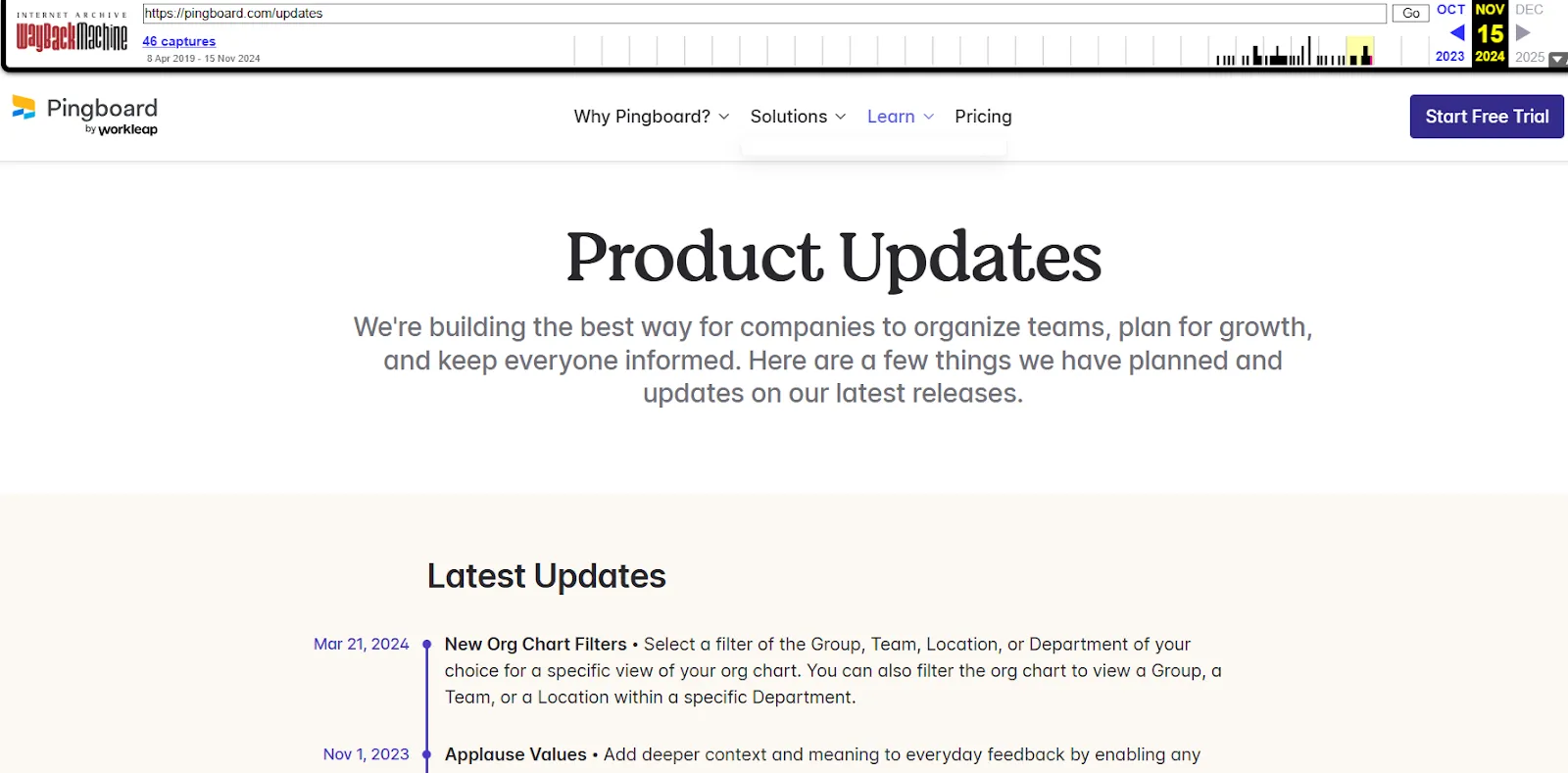
Pingboard's update tempo seems to have hit a quiet patch. While they used to be buzzing with frequent new releases, the standalone product's update page has vanished since November 2024. This has some users scratching their heads and wondering what cool new features might be on the horizon.
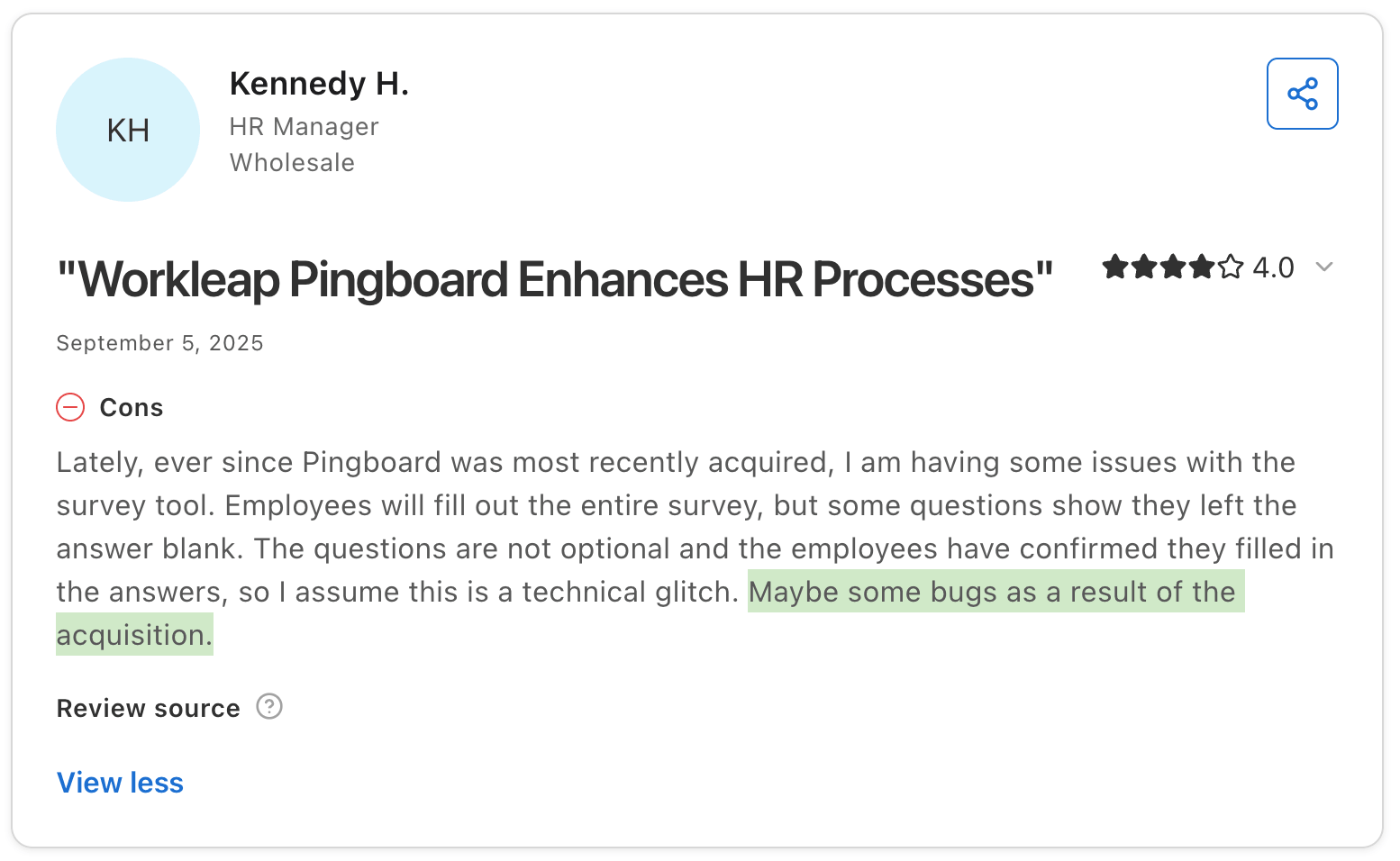
Additionally one user has noted issues with the survey tool not working properly after acquisition. This breakdown in a core feature highlights potential post-acquisition integration or maintenance oversights that directly impact user experience and reliability.
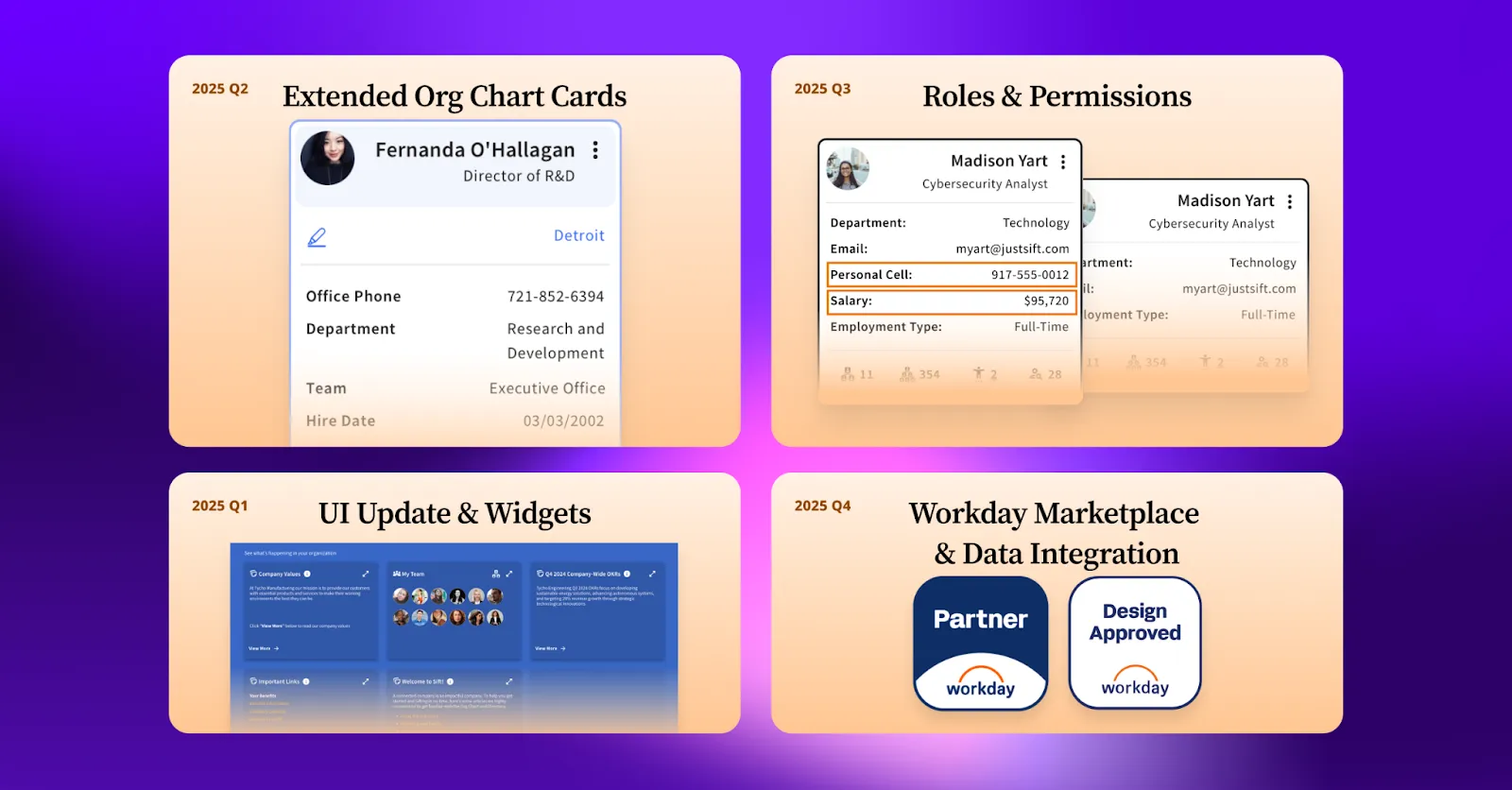
Sift’s Approach: Sift holds quarterly product webinars and frequently updates users via blog posts when new releases are launched.
Here is a look at all product releases we’ve had just in 2025.
4. Limited "Expertise" Discovery
In 2026, a directory needs to do more than just show who someone reports to. It needs to show what they know and can do.
While Pingboard captures basic profiles and "fun facts," its search functionality is often cited as limited. It’s great for a "Who’s Who" game, but not for finding a specific technical skill or past project experience hidden within your workforce.
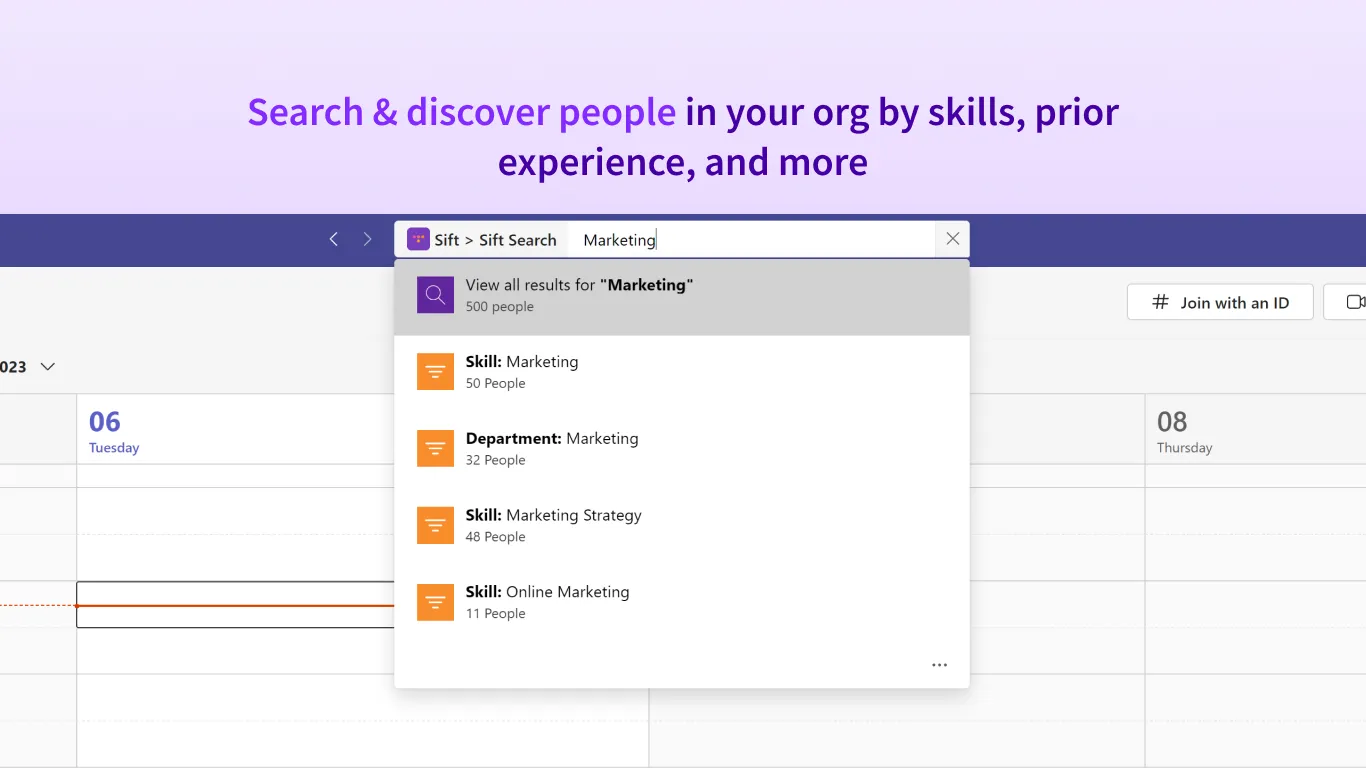
The Sift Approach: Sift is a People Discovery engine. We allow you to search across a massive range of attributes—from technical skills and certifications to name pronunciation and personal interests—turning a static chart into a living map of your company's collective intelligence.
5. Pricing
Following its acquisition, Pingboard's pricing information has become extremely difficult to locate, it's been removed from Workleap's website entirely. This apparent lack of transparency seems to encourage companies to buy into Workleap's wider suite of products, potentially forcing them to purchase features they do not need simply to access Pingboard.
The Sift Approach: Sift pricing is transparent and right in front of you. Just visit https://www.justsift.com/pricing
There is even a pricing calculator on the Sift pricing page to figure out exactly what the cost is.
6. Slow Customer Support
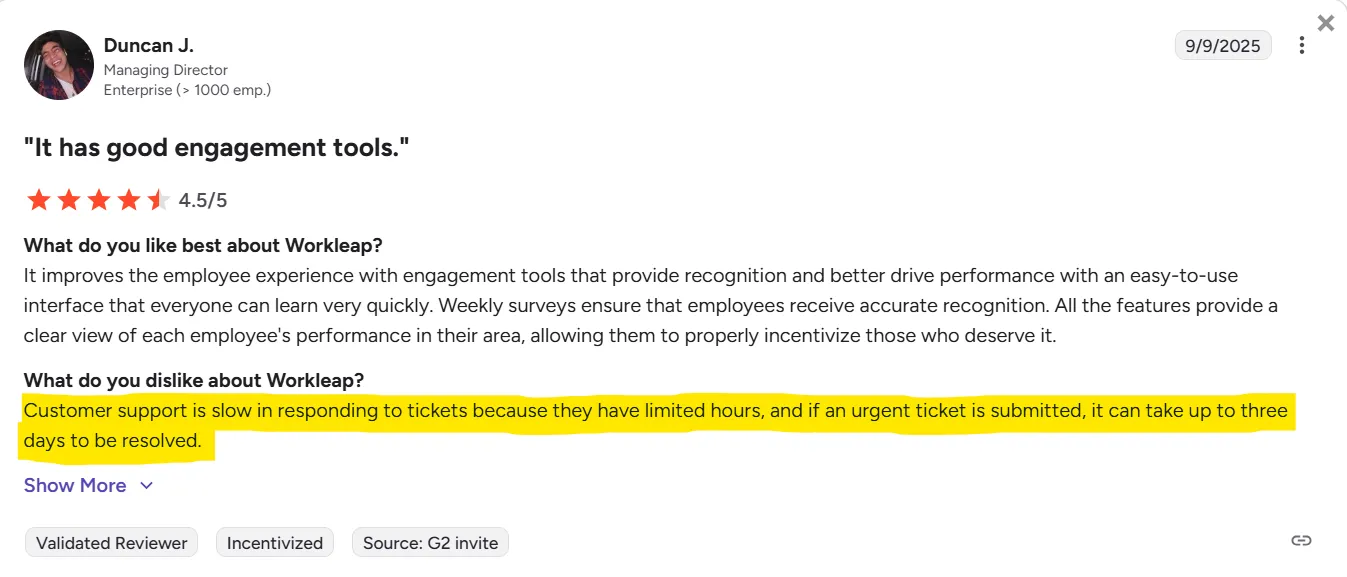
Users mention how often support tickets can take to get resolved, sometimes 3 days for a ticket to get resolved.
The Sift Approach: Sift is ranked among the best for Ease of Setup, Quality of Support on G2. Winning the Best Relationships badge for Org Chart Software in multiple quarters. Checkout this Sift vs. Workleap G2 comparison on G2 to see how Sift outperforms Workday in these customer success areas.
Sift vs. Pingboard: Side-by-Side Comparison
When choosing between Sift and Pingboard, the right choice usually depends on your company's size and where your employees spend their workday.
While Pingboard is often celebrated for its "fun" engagement features like employee recognition and games, Sift is built for organizations that prioritize speed, data integrity, and deep searchability across a large workforce.
The Key Takeaway
- Choose Pingboard if: You are a smaller team looking to boost "culture" and engagement through social games and peer recognition.
- Choose Sift if: You have outgrown your current directory and need a single source of truth that allows your employees to find internal experts and navigate complex reporting lines instantly, right from within Microsoft Teams.
Frequently Asked Questions: Sift vs. Pingboard
1. Is there a better Pingboard alternative for large companies?
Yes. While Pingboard is excellent for small startups, Sift is specifically designed for mid-market and enterprise organizations (500 to 50,000+ employees). Sift handles complex matrix reporting and massive data sets without the "lag" or loading issues often reported by Pingboard users in larger firms.
2. Does Pingboard integrate with Microsoft Teams?
Pingboard offers an integration focused around status updates related to greetings, out-of-office statuses, upcoming work anniversaries/new hires and applause for employee achievements. While Sift provides a native Microsoft Teams experience, allowing employees to search the directory, view full profiles, and navigate the org chart entirely within the Teams interface. This significantly drives higher adoption rates because it meets employees where they already work.
3. Why is my Pingboard org chart running slowly?
As companies grow, visual-heavy org charts can struggle to render hundreds or thousands of profiles simultaneously, leading to "clunky" navigation. Recent user reviews in 2025 and 2026 have noted performance dips as headcount increases. Sift uses enterprise-grade indexing to ensure that your org chart remains lightning-fast, regardless of how many thousands of employees you add.
4. Can I search for specific skills in Sift that aren't in Pingboard?
Yes. While Pingboard focuses on basic "Who's Who" data (Name, Title, Department), Sift is a People Discovery engine. Sift allows you to search for technical skills, past project experience, certifications, and even personal interests. This makes Sift a powerful tool for resource management and internal recruiting, not just a static directory.
5. How hard is it to switch from Pingboard to Sift?
The transition is seamless. Because Sift integrates directly with your existing "source of truth" (like Azure AD, Google Workspace, or your HRIS), we can automate the data migration. Most teams find that Sift actually cleans up their existing data gaps during the sync process, providing a more accurate directory than they had before.
Conclusion: Choosing the Right Foundation for Your Growth
At the end of the day, both Sift and Pingboard serve a purpose. If you are a 50-person team looking for a fun way to learn names over coffee, Pingboard is a fantastic entry-point.
However, if you’ve felt the frustration of a "laggy" org chart, a mobile app that crashes when you need it most, or the inability to find a specific expert within your own company—it’s a sign that you’ve outgrown your current tools.
Modern, fast-moving organizations need more than a static directory; they need a People Discovery engine. By choosing Sift, you aren’t just getting an org chart—you’re getting:
- Enterprise Speed: No more waiting for "clunky" charts to load.
- Deep Searchability: Find the right person for the right project based on skills, not just titles.
- Native Integration: Bring your directory directly into Microsoft Teams and Outlook where your work actually happens.
Don't let your company's growth be limited by the tools you used to get started. It’s time to move toward a directory that scales as fast as you do. Give Sift a try for 14 days to see the difference.